 Reviews



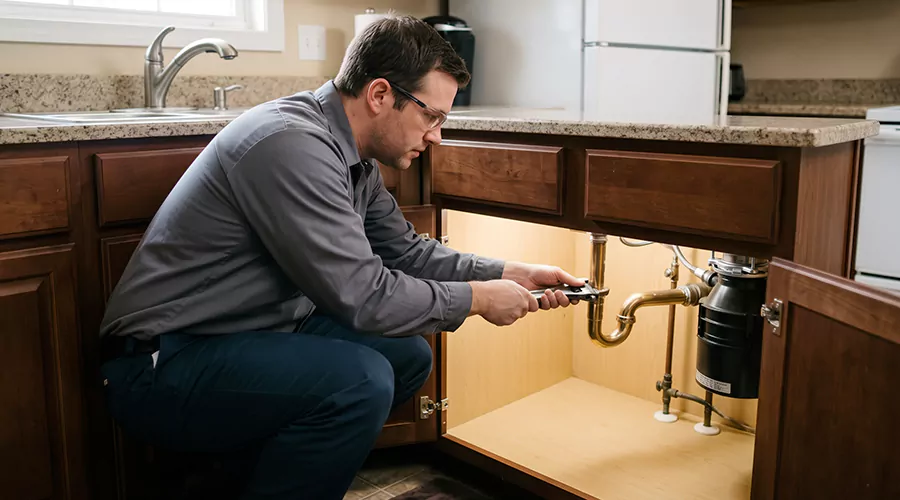
To fix a pipe leak, shut off the water supply and identify the damaged section before selecting a repair method. A suitable pipe repair clamp or repair wrap can temporarily control some accessible leaks. However, a permanent repair may require replacing the damaged pipe or fitting.
Professional pipe leak repairs cost an average of $500 in the United States in 2026, with reported costs ranging from $150 to $4,700. The final price depends on the pipe material and the accessibility of the damaged section. The correct repair starts with identifying whether the leak involves a pressurized water-supply pipe or a drainage pipe.
What Should You Do First When a Pipe Starts Leaking?
The first step is to stop additional water from entering the damaged pipe. An accessible shutoff valve may isolate the affected fixture. A leak involving the main supply or another pressurized line may require closing the property's main water valve.
Follow these steps before attempting repairs:
- Identify the affected pipe: Determine whether it carries clean water or wastewater.
- Locate the shutoff valve: Use the nearest appropriate valve when possible.
- Stop the water supply: Close the valve without forcing damaged components.
- Release remaining pressure: Open an appropriate faucet when safe.
- Protect the surrounding area: Move nearby belongings away from the water.
- Check for electrical hazards: Stay away from wet outlets and electrical equipment.
- Inspect the leak: Determine whether water is escaping from a joint or the pipe itself.
Do not attempt to repair a gas pipe using methods intended for household water pipes.
Lowe's recommends isolating the water supply before applying ordinary pipe repair products. It also emphasizes using materials compatible with the pipe and its operating conditions.
How Can You Identify the Type of Pipe Leak?
The location and timing of a leak can help identify the damaged component. A pressurized water-supply pipe may leak continuously, while a drainage pipe generally leaks when wastewater passes through it.
A careful inspection can prevent unnecessary replacement of undamaged plumbing.
| Leak Type | Common Symptoms | Possible Repair |
|---|---|---|
| Loose threaded connection | Water collects around a fitting | Repair the connection |
| Damaged compression joint | Water escapes near a nut | Replace the damaged seal or fitting |
| Small hole in exposed pipe | Concentrated dripping | Temporary patch followed by permanent repair |
| Cracked pipe section | Water escapes through the pipe wall | Replace the damaged section |
| Leaking P-trap | Water appears during sink drainage | Repair the joint or replace the trap |
| Hidden supply leak | Unexplained moisture or continuous water loss | Locate and repair the damaged pipe |
The repair must match the pipe's material. A fitting intended for copper piping may not be suitable for another material.
What Are the Warning Signs of a Developing Pipe Leak?
Pipe leaks do not always begin with visible spraying. Some develop gradually and remain hidden until surrounding materials become wet.
Inspect your plumbing when you notice these warning signs:
- Water repeatedly collects beneath an exposed pipe.
- Moisture forms around a plumbing connection.
- Rust or corrosion develops near a fitting.
- A cabinet remains damp after normal use.
- Paint begins bubbling on a wall.
- A ceiling develops unexplained water stains.
- Water pressure declines unexpectedly.
- The water meter records consumption while fixtures are unused.
- A musty odor develops near concealed plumbing.
- The leak becomes more noticeable over several days.
A single warning sign cannot identify the damaged pipe. However, several symptoms occurring together can help narrow the investigation.
How Do You Temporarily Fix a Small Pipe Leak?
A temporary repair can limit water loss until the damaged pipe receives a permanent repair. Several products are designed for accessible household water pipes.
The correct product depends on the pipe material and the severity of the damage.
Common temporary repair methods include:
- Self-fusing repair tape: Forms a temporary seal around certain small leaks.
- Pipe repair clamp: Compresses a rubber gasket against the damaged area.
- Epoxy repair putty: Covers certain minor defects when compatible with the pipe.
- Pipe repair wrap: Uses a suitable reinforcing material to cover a localized leak.
These products have different installation requirements. Some require a clean and completely dry surface. Others have specific pressure ratings or restrictions involving drinking-water systems. Lowe's identifies these methods as temporary solutions and recommends following the instructions supplied with each repair product. Never apply an unsuitable household adhesive to a pressurized pipe.
How to Apply a Pipe Repair Clamp?
A pipe repair clamp is designed to cover certain accessible leaks. Its gasket compresses against the pipe's exterior to control escaping water.
For a compatible clamp:
- Shut off the water supply.
- Release the remaining pressure.
- Clean the exterior around the damaged area.
- Check that the clamp matches the pipe's diameter.
- Position the gasket over the leak.
- Install the clamp according to its instructions.
- Tighten the fasteners evenly.
- Avoid overtightening.
- Restore pressure only as permitted by the product instructions.
- Inspect the repaired area for moisture.
A repair clamp should not be used to conceal extensive corrosion or major structural damage.
How Do You Permanently Repair a Leaking Pipe?
A permanent pipe repair addresses the damaged material rather than covering the visible leak. Depending on the failure, this may involve replacing a joint or installing a new section of piping.
The method varies according to the pipe material.
Copper Pipes:
Copper plumbing can develop pinhole leaks or damaged connections. A permanent repair may require removing the affected section and installing compatible replacement material. Suitable repair methods depend on the pipe's condition and local plumbing requirements.
PEX Pipes:
PEX pipes use specialized fittings and connection systems. A leaking connection may require a compatible replacement fitting. Some systems use crimp rings while others use expansion or approved push-to-connect connections.
PVC and CPVC Pipes:
PVC and CPVC are different materials with different temperature ratings and installation requirements. A damaged section may require compatible replacement piping and approved fittings. Never assume that a product labeled for PVC is automatically suitable for CPVC or a hot-water supply line. Lowe's provides separate repair guidance for copper and PEX connections because their installation methods differ.
How Do You Check Whether the Repair Worked?
A repaired pipe should remain dry under its intended operating conditions. A temporary patch that stops dripping while the water is turned off has not yet demonstrated that it can withstand normal pressure.
Testing should be controlled.
- Confirm that the repair is complete.
- Allow any repair material to cure as instructed.
- Make sure nearby electrical equipment is safe.
- Restore the water supply gradually.
- Check the repaired section for moisture.
- Observe nearby connections.
- Test the connected fixture when appropriate.
- Inspect the area again after normal use.
- Stop the test immediately if the leak returns.
A repair that continues dripping requires further attention rather than additional pressure or excessive tightening.
How Much Does Pipe Leak Repair Cost in 2026?
Repair expenses depend on pipe accessibility and the amount of damaged material.
An exposed connection is generally easier to repair than a pipe hidden inside a wall.
| Repair Category | 2026 U.S. Cost |
|---|---|
| General pipe leak repair | 150–4,700 |
| Average pipe leak repair | $500 |
| Small accessible water-line repair | Starting around $190 |
| Main water-line repair | 340–1,500 |
| Typical burst pipe repair | 200–3,000 |
These figures reflect Angi's July and August 2026 pricing reports. They describe different repair categories rather than additional charges that every project will incur.
When Should You Call a Professional?
Professional assistance becomes appropriate when the damaged section cannot be isolated or repaired safely. Hidden water damage and extensive corrosion also require additional attention.
Seek professional repair when:
- The pipe has completely split.
- Water is escaping behind a wall.
- The damaged section is severely corroded.
- The pipe serves a difficult-to-access area.
- A temporary patch cannot control the leak.
- Several connected pipes show damage.
- The leak returns after an earlier repair.
A proper repair should address the cause of the damage as well as the visible opening.
How Can You Prevent Another Pipe Leak?
Preventive maintenance focuses on reducing conditions that weaken pipes and identifying early signs of damage.
Useful maintenance habits include:
- Inspect exposed plumbing connections regularly.
- Protect vulnerable pipes before freezing weather.
- Avoid storing heavy objects against exposed pipes.
- Investigate unexplained water-pressure changes.
- Replace visibly deteriorated fittings.
- Monitor unexpected increases in water consumption.
- Address small leaks before they become larger.
Knowing where the main water shutoff valve is located can also reduce damage if another leak develops.
Conclusion
To fix a pipe leak, stop the water supply and identify the damaged section before selecting a repair method. Temporary clamps or repair wraps can control certain accessible leaks, but a lasting solution may require replacing the damaged material. Choose components compatible with the existing plumbing and test every completed repair. If the pipe is severely damaged or inaccessible, professional repair may be necessary.
Frequently Asked Questions
Can pipe repair tape permanently fix a leak?
Most repair tapes are intended as temporary solutions. A permanent repair depends on the pipe material and the underlying damage.
Can I repair a leaking copper pipe myself?
Some accessible repairs are possible with suitable equipment. The method must comply with the fitting manufacturer's instructions and applicable plumbing requirements.
Does a small pipe leak require immediate attention?
Yes. Even slow leaks can damage surrounding materials when moisture remains undetected.
Can a pipe repair clamp stop a pressurized leak?
Certain properly rated clamps can control localized leaks. Follow the product's pressure and installation requirements.
How do I know whether a pipe needs replacing?
Extensive corrosion or cracking may make replacement necessary. The condition of the surrounding pipe should also be evaluated.